Maryland Is Top Three In Marijuana Arrests
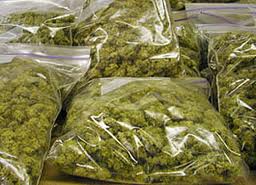
The Blog has posted numerous articles on the recent steps taken by the state legislature to lower the maximum punishments for possession of marijuana, and to partially legalize the drug for medical use. We have also posted about more progressive bills introduced by Baltimore area politicians, which received a great deal of support in Annapolis despite never crossing the governor's desk. Senator Zirkin and Representative Morhaim both proposed legislation designed to decriminalize the personal use of marijuana in this year's legislative session. The movement is gathering steam, but you wouldn't know it by looking at the actual data. The fact is that arrests and criminal prosecutions for pot possession are on the rise in Maryland despite the efforts of lawmakers to curb these docket clogging cases. And perhaps the most staggering data is not the rising arrest numbers, but the fact that our state has per capita the third most marijuana possession arrests in the entire country. Closer inspection of the 2010 data reveals that Worcester County has the highest pot arrest numbers in the country for a county with a population over 30,000. This number is no doubt influenced by the obscene amount of Ocean City marijuana arrest during the summer months when the city doubles its police force by hiring truckloads of 21-year-old part time cops. But the highest per capita rate in the country? For a state that is moving toward decriminalization this is indeed shocking.
Continue reading "Maryland Is Top Three In Marijuana Arrests" »
More than a year ago the Maryland Court of Appeals threw out Alonzo King's rape conviction after ruling that police had illegally seized his DNA sample. Mr. King was arrested on an unrelated assault charge in 2009 and his DNA was collected under authority of a state law, which allowed cops to collect such samples from anyone arrested for a serious offense. This sample was fed into an FBI cold case database several months later and it matched an unidentified sample taken from the scene of a 2003 rape. Arrest and prosecution followed soon thereafter, and Mr. King suffered the same fate that most defendants do when trying to fight a case with inclulpatory DNA evidence, as he was found guilty and later sentenced to life in prison. Shortly after the Court of Appeals vacated King's guilty plea the United States Supreme Court agreed to hear the case on a writ of certiorari. During the past year Mr. King, and to a lesser extent state law enforcement officers, Governor O'Malley, Attorney General Gansler, and anyone with direct or indirect concerns about our civil liberties have been on edge waiting to hear from the Court, and as of this week the wait is over.
Just two months ago the Blog posted an article about a
Over 30 years ago the National Transportation Safety Board advised all states to alter their drunk driving laws by lowering the legal blood alcohol limit from .10 to .08. But the NTSB and congress did not have the direct power to compel states to follow this recommendation through federal legislation. As a result, many states were slow to act on the recommendation and some simply ignored it for years. A few states, including our very own Maryland, likely would still have not ratified the .08 limit had it not been for the federal government employing an all too common backhanded tactic to force the hand of the state governments. States depend on the federal government for a variety of funding grants, but perhaps no single grant is larger than the money states are given to build and maintain highways. The federal money obviously comes at a cost, and congress has the authority to take it away as easily as it gives it. In the 90's congress began to threaten to discontinue federal highway funding, which amounts to tens of millions, to any state that decided to exercise their constitutional autonomy by not following the NTSB's recommendation. Federalism is great, but money talks, and by 2004 the DUI laws of all fifty states had incorporated a .08 BAC limit. Maryland held out until 2001.
Large scale drug smuggling operations are usually prosecuted in federal court, but when the feds decline to take over an investigation it gives the local police some time in the spotlight. The Harford County Sheriff has announced the details of a two year long drug trafficking investigation, that spanned from California to Maryland. The investigation began back in 2010, and police began making arrests in October of 2012. As many as 15 people have been arrested and charged with various crimes under the Maryland controlled dangerous substance laws. Some of the cases have already been resolved by way of guilty pleas, and others remain open with pending trial dates. Police first began their investigation after a 2010 tip from a citizen revealed that an Aberdeen man had been selling large amounts of marijuana throughout Harford County. Over one year later, cops received another tip that linked an Abingdon man with the alleged Aberdeen dealer. This second tip seemed to jumpstart county police into action, as cops began a lengthy undercover operation designed at building a case against all of those involved.
It is no longer surprising to see an American politician wind up in the news with some sort of personal legal issue. It's is an unfortunate sign of the times, but our country's so called leaders seem to only make the news when they are in trouble. Most politicians outside of the heavy hitters remain relatively anonymous until the day their mug shot is plastered on our television or computer screens. Everyone knows Obama and O'Malley, but how many citizens actually know who their state and local representatives are? In the last few months, two Maryland politicians have become better known thanks to run ins with the law. Both of these incidents involve alcohol, as both were charged and subsequently convicted of DUI.
About a year ago the Blog posted an article addressing the issue of whether it is legal to video record a police officer engaging in his or her duties. While there is clearly no state or federal law prohibiting this protected First Amendment behavior, the answer is not so simple. In other words, despite no specific law prohibiting the act of filming a cop, it's not legal if the police can just arrest you for disorderly conduct or some other petty offense. A year ago, the Maryland Attorney General issued an opinion advising police departments around the state that the public has the right to video record its officers. The Department of Justice, or DOJ, also filed an 11-page letter with the court in a Baltimore City civil rights lawsuit. The lawsuit was based on a 2010 incident at the Preakness where a man's phone was confiscated after he was seen recording the police make an arrest. This DOJ letter pointed out that the Baltimore Police Department's policies do not adequately protect a citizen's right to record cops. Recently, the DOJ has once again reiterated its stance on this issue by filing another letter with the United States District Court in Maryland.
The 2013 legislative session officially came to an end last month, but 265 bills still awaited Governor O'Malley's signature before they could make the transformation to state laws. The bills covered dozens of different fields of law including health care, environmental law, consumer regulations, education, and of course criminal law. The most notable bills that crossed the governor's desk happened to be right up our alley in the field of criminal law, so naturally those are the bills we will discuss. The blog has followed the progress of state marijuana reformation for the past year, and it seems for there is now a small amount of closure on the topic. The signing of the medical marijuana bill closed the debate until next year's session about how far Maryland was willing to move toward legalization. And to some up what this bill actually means for the state residents, it's safe to say the law is a lot of bark and a little bite.
The last time Baltimore was headlining national news articles the Ravens had just completed their unlikely and dramatic run to a Superbowl championship. It's been a few months, but our great city is back in the national headlines, only this time there is no celebration to be had. On the contrary, the past two weeks have been extremely embarrassing for all those involved with the City's corrections department, as well as for city and state politicians and government officials. Over the past year law enforcement agencies from the federal and state governments have been investigating allegations of organized gang activity within the walls of the Baltimore City Detention Center. Last week, the United States Attorney unsealed the bombshell indictment that charged various inmates and prison guards with running a large-scale racket within the jail's walls. The indictment alleged that gang members sold hundreds of thousands of dollars of drugs and other contraband that was smuggled into the jail with the help of 13 corrections officers. Other allegations include bribery, extortion, assault, robbery, witness retaliation, and even murder. All those charged in the federal indictment face lengthy prison sentences for racketeering in addition to the individual criminal acts.
The Blog has chronicled some interesting criminal behavior in the past year. To date, the most notable goes to the man charged with
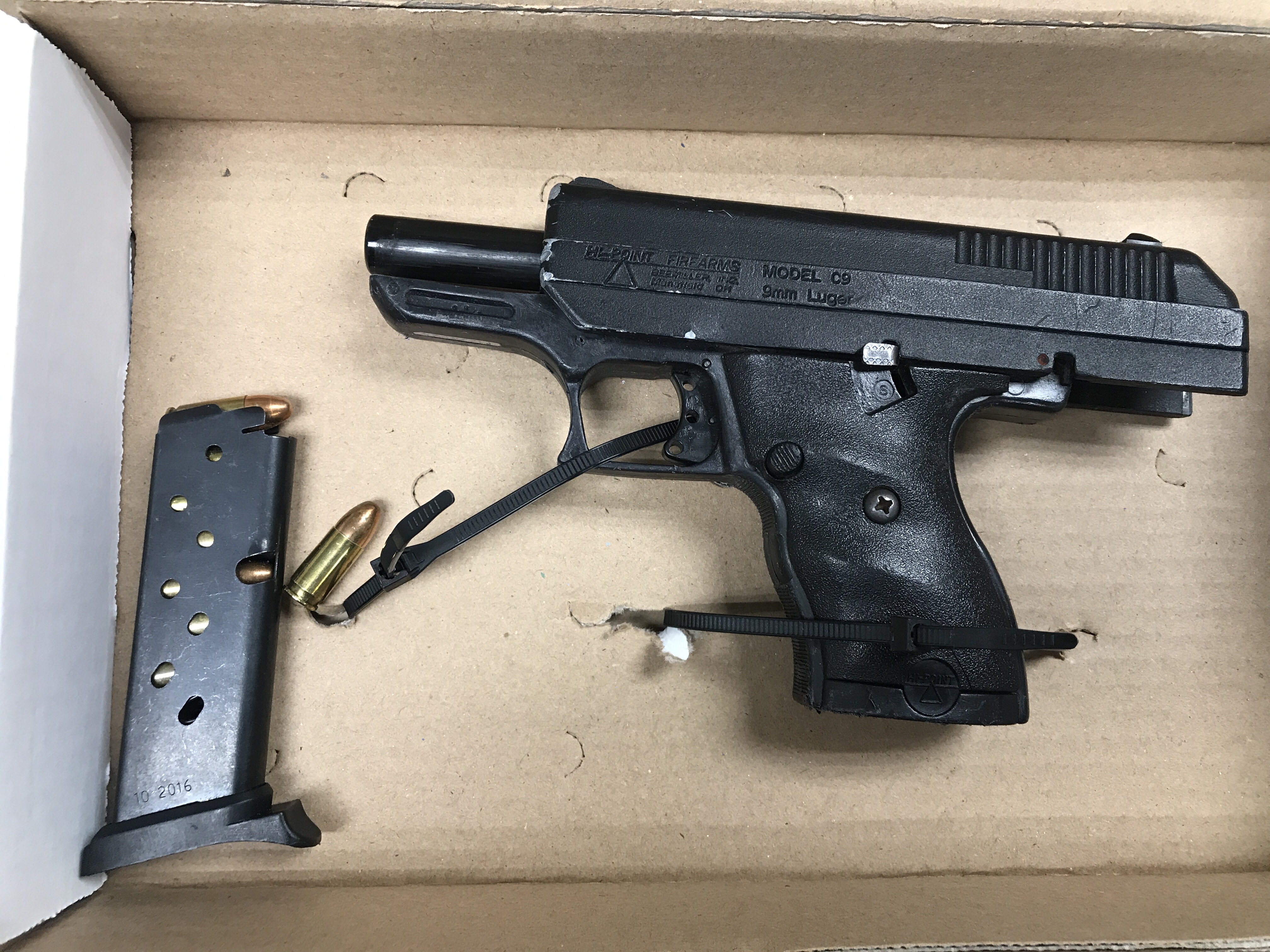
Maryland is widely known as having some of the strictest gun laws in the entire country. Few states have provisions that even come close to the highly controversial law, which requires citizens to prove a good and substantial reason to possess a carry permit. Maryland also requires mandatory background checks for all gun purchases, regardless of whether the seller is a licensed dealer or a private party. There is also a mandatory seven-day waiting period in order to buy a gun. And now after the close of this years legislative session in Annapolis, the strict are bound get stricter after The General Assembly passed new firearms regulations. The bill, which has generated national attention, is awaiting Governor O'Malley's signature before it becomes law. All prior indications from the Governor's office have signaled that signing on the dotted line is a foregone conclusion. The new law will have a sweeping impact on all aspects of firearms regulation including purchasing, possessing, and selling.
The FBI and the United States Attorney for the District of Maryland recently announced that a 36 year-old Baltimore Police officer has pleaded guilty to multiple drug and gun felonies. The investigation began in early 2012 when the feds received information from an anonymous source that the crooked cop was trafficking in stolen property. As a result of the tip and other corroborating information, feds secured a warrant to wiretap the officer's cellphone. Through the wiretap law enforcement learned that the officer was selling stolen iPhones, iPads, and other electronics, some of which were confiscated during arrests and never submitted into evidence. Federal investigators also became aware of a new development, that the officer was involved in a more sophisticated and organized criminal scheme with a street level drug dealer.
A little over a year ago, Federal District Court Judge Benson Everett Legg ruled that the "good and substantial" provision of the Maryland concealed carry gun law was unconstitutional. This provision required citizens to prove to the state Handgun Permit Unit that they had a good and substantial reason before being granted a concealed carry permit. When a Baltimore County man was denied one such permit, he filed suit in federal court, and the Second Amendment Foundation, which advocates for the preservation of the right to carry, joined in the lawsuit. Despite the Attorney General's best efforts, Judge Legg concluded that the law was too broad to satisfy the state's compelling interest to protect its citizens and prevent crime. According to the Judge the good and substantial provision did not safeguard the public from every handgun related hazard, and therefore did not do enough to justify a significant limitation on the constitutional right to bear arms. But just last week, a three-judge panel sitting for the U.S. Court of Appeals for the 4th Circuit unanimously disagreed with Judge Legg, and reversed his decision.
Although not an official public holiday in America as it is in Ireland, each year on St. Patrick's Day millions of Americans flock to the bars and pubs to join in the festivities. It is one of our country's favorite holidays, where it's not just acceptable, but encouraged to dress up in green and drink beer of the same color. Everyone is Irish on March 17th. But St. Patrick's Day is also a busy day for law enforcement, and even busier when the holiday happens to fall on a weekend as it has for the past two years. This year, dozens of Maryland law enforcement agencies are ramping up their DUI patrols to combat the yearly spike in alcohol related car accidents on this festive day. Starting at 9 p.m. tonight, and lasting through Monday morning, the state police as well as local cops will be out in full force to zero in on anyone who attempts to get behind the wheel after one too many Guinness pints. The patrols will focus on areas that have a past history of larger volumes of injury accidents and other incidents involving alcohol. DUI patrols will not exclusively patrol these areas though, and are sure to be out in greater numbers on all heavily traveled roads.